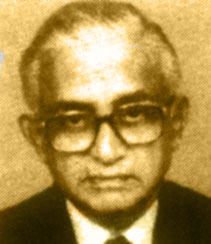
Mr Sadanand Shetty......

Mr Sadanand Shetty......
Sadanand Shetty...Founder OIOP

Sunday, September 4, 2011

Winds of Change


‘Team Anna’ has become the new face of the civil society in India today. With the 12-day fast of Anna Hazare forcing the Parliament to look at the Jan Lok Pal Bill with a new perspective, it was a triumphant moment not just for the team but for the entire nation. The highlight of the event was the mass movements organised by common citizens not just all over the country but also in certain parts of the globe. Though the motive of Anna and his team cannot be questioned, some did raise eyebrows on the means that they resorted to. Amidst such a scenario, One India One People looks at the past, present and future of civil society movements in India, in its September 2011 issue ‘Winds of Change’.


‘Civil Society in India: alive and kicking’ focuses on the vibrant civil society movements in India. It is just that the term got more popular, thanks to Team Anna. While some may be alarmed by these developments, some may herald them as nourishing agents of our fragile democracy. Whatever be the case, these movements are surely turning a new leaf, says Prof. Vrijendra, a professor and an active voice on social and human rights issues.


My-way or No-way, not the right way – this approach cannot yield enduring results in a complex society and may cause damage to democratic foundations in the long run. Civil Society must strive for depth, expertise and consensus among all its stakeholders, advocates Dr. Jayaprakash Narayan, the founder and President of Lok Satta Party.


Is the civil society crossing limits? N. Vittal, former Central Vigilance Commissioner, opines that though the motive of Team Anna in the fight against corruption cannot be questioned, what has become debatable are the methods adopted by them. He believes that in focusing their energies on impractical objectives, the civil society has definitely crossed its limits and failed.

Empowering people is the solution, says Justice Hosbet Suresh (retd.) and avers that civil society groups should understand that law by itself, strong or weak, will not solve the problem. The real solution lies in strengthening the human rights movement, express solidarity with them, with a view to empower people to live with human dignity.


Prof. Ram Puniyani, former professor at IIT Mumbai and also an active participant in social issues, particularly those related to preservation of democratic and secular ethos in our life, observes that the ruling government and civil society groups should not be looked at as hostile opponents but as complementary groups meant to take the society further. 


Kamayani Bali Mahabal, an expert in gender, health and human rights issues writes on the global movements that brought social change. Suppression and injustice cannot last for long. When people rise against autocracy to demand justice, no authority, however powerful, can ignore or defeat it.


Who is the true representative of the people? – asks Tanveer Jafri, columnist with popular daily newspapers/portals in India and abroad and a recipient of many awards in the field of communal harmony and other social activities. People elected their representatives so that they would speak for the common man and address his grievances. But today, people have lost faith in them as they have become corrupt and self-centred. No wonder then, a new order is rising who is fighting the system. But can they be entrusted to be the true representatives of the people, wonders Jafri.


A civil society of Gandhi’s imagination - Dr. Ravindra Kumar, Indologist and former Vice Chancellor of CCS University, Meerut, writes about a civil society as perceived by Mahatma Gandhi.


As usual, the ‘Know India Better’ section features an enthralling piece with lots of information and astonishing pictures. This issue, we are featuring ‘ALMORA - an enchanting town on the ridge. The beauty of Almora and its surrounding areas, in the Kumaon region of Uttarakhand is unmatched. Almora is historically significant and a pilgrim’s delight with many ancient and beautiful temples. Today, development may be fast encompassing the region, but the serenity and beauty of this charming hill town remains untouched. (Text and photos : Dr. M.A. Haque)


In the ‘Face to Face’ section, Dr. Shantha Sinha, the Chairperson of the newly constituted National Commission for Protection of Child Rights (NCPCR) and renowned anti-child labour activist, speaks on eradicating child labour and granting children a dignified life.

This issue we feature the following great Indians:

Phulrenu Guha – Crusader for women’s freedom (1911-2006) – She was a freedom fighter, social worker, philanthropist, founder of institutions and a pioneering leader of women’s movement. Her contribution to the upliftment of women and societal development is incomparable.


CQMH Abdul Hamid PVC – Inspiring bravery (1933-1965) – Displaying complete disregard for his own safety, CQMH CQMH Abdul Hamid PVC, put up a brave fight against intruders. His actions inspired his comrades to put up a gallant fight and beat back the enemy assault. His bravery in face of the enemy was a shining example to the whole division and in the best traditions of the India Army.


Chaudhary Ranbir Singh – A great son of Mother India (1914-2009) – Chaudhary Ranbir Singh (Hooda) was one of those brave sons of Mother India who fought for our freedom under the leadership of Mahatma Gandhi and post independence worked day and night for rebuilding the nation. 

Tuesday, August 16, 2011


Cultural Treasure


One of the unique features of India is its rich and vast cultural heritage. India has a treasure trove of various culture phenomena that comprises arts, traditions, religious confluence, centuries old literature, customs, visual and performing arts and so on. Thus it becomes the responsibility and duty of each one of us to understand the cultural diversity of our country and help preserve it.

With a view to acquaint our readers with the importance of conserving our rich culture and to know some of the components of our culture better, like the temple architecture, the richness of Sanskrit language, the relevance of Upanishads, Vedic values, ancient manuscripts, Vastu Shastra and more, One India One People has taken up ‘Culture’ as its theme in August, which happens to be the 14th anniversary of One India One People Foundation. 


Tracing the cultural history of India and highlighting the importance of oral and wisdom traditions that form the bedrock of Indian culture, Dr. Gautam Chatterjee, an expert on Indological studies and Deputy Controller (Media) at Indira Gandhi National Centre for the Arts, New Delhi, in the lead article talks of conserving our culture and observes that traditions, customs, beliefs, rituals, art, literature, architecture are all part of the rich Indian culture that has evolved, sustained and nurtured over a time by the people themselves, who have acted as its custodians.


Tushar Gandhi, social activist and the great grandson of Mahatma Gandhi and the Managing Trustee of Mahatma Gandhi Foundation, Mumbai, in his article on the foreign influence on Indian culture, opines that culture does not need protection and can withstand external influences, but it is up to us to accept what is worthwhile and discard what is not.


Emphasising the importance of Upanishads, B. M. N. Murthy, a prolific writer on Indian heritage and Vedic wisdom, says that the Upanishads, also called the Vedanta, embody the ancient Indian wisdom and the grand outpourings of the spiritual experiences of those unique sages and seers who saw the ‘Truth’ and thus gave us thoughts as no other philosophy of the world could give. But how many of us actually realise the importance of this great work, he asks.

 In the article on the relevance of the Sanskrit language, Mr. Murthy states that Sanskrit is not merely a language but it represents the totality of Hindu culture right from Kashmir to Kanyakumari. Unfortunately, the general perception that Sanskrit is complicated has restricted its utility to the recitation of Vedic mantras during religious ceremonies, he rues.


Our ancient manuscripts are a window to the enormous knowledge that our country has and gives an idea to the posterity about the amount of strain our forefathers took to pass on the light of knowledge. Prof. M. R. Veerabhadra Swamy, Professor & Chairman, DOS in Sanskrit, University of Mysore and the Director of the Oriental Research Institute, Mysore, highlights the importance of preserving our ancient manuscripts and guides us on how to preserve them.


N. Ramasharma, an expert on Vedanta, and who looks after the administrative affairs of Sri Kanchi Kamakoti Peetam, Kancheepuram, Tamilnadu, talks about our Vedic heritage and gives us simple lessons on how to live a happy life.


Dr. Ishrat Alam, Associate Professor, Centre of Advanced Study in History, AMU, Aligarh and Member Secretary, Indian Council of Historical Research, New Delhi, writes about the invaluable contribution of some of the prominent dynasties in promoting art and architecture, especially temple architecture till the thirteenth century.


Vastu Sastra is the science of dwelling or architecture. The science owes its origin to the Vedas – the knowledge books of India – Rig, Yajur, Sama and Atharva. Vastu is said to relate to Atharvaveda, says Niranjan Babu Bangalore, well-known international consultant in Vastu, author and a member (as a Vastu specialist) of Sri Dharmastala Manjunatheshwara Dharmottanna Trust, (Dharmastala, India), which maintains and manages a large number of India's well-known temples and other theological institutions and gives us an account of the origin of Vastu and its relevance even today.


When you talk about culture, can the colourful festivals of India be far behind? Katie Dubey, travel writer, was lucky to visit Assam during the native festival of Bihu and she comes back mesmerised with the celebrations.


Mumbai continues to be vulnerable. Once again it has been targeted by terrorists. Today ordinary citizens ask if the US can prevent attacks on its homeland after 9/11, why can’t India do it? That is because we refuse to learn any lessons from the past experiences, says P. M. Kamath, former Professor of Politics, University of Mumbai; who has authored numerous research papers on terrorism points out how India refuses to learn from its past experiences.


 ‘Know India Better’ features Himachal Pradesh, a place steeped in myths, legends, fantasy and history. Travel writer Akul Tripathi visits the Dev Bhumi or the ‘Abode of the Gods’ to give us an account of the spectacular flora and fauna inside the Great Himalayan National Park (GHNP) and the popular hill station Manali, and its picturesque surroundings


In our ‘Face to Face’ section, eminent writer and theatre critic Shanta Gokhale speaks on culture and its various traits and trends. Interviewed by Anuradha Dhareshwar, Associate Editor, OIOP.

Great Indians:


The raw courage, personal example and supreme sacrifice of Major Padmapani Acharya MVC (1968-1999) encouraged his troops to quickly secure Knoll during the Kargil war. Like his mythical mentor Arjun of the Mahabharat, he fought bravely till his last breath. Contributed by Brig S. C. Sharma (retd.)


M. F. Husain (1915-2011) was a controversial figure alright, but his contribution to Indian art cannot be ignored. He played a major role in showcasing Indian art and artists on the international stage. Contributed by Prakash Bal Joshi, Mumbai based journalist and artist.


Solid academic achievements, scholarly expertise, objective analysis, credibility, integrity and above all, humility and values were what made Dr. Suresh Tendulkar (1939-2011) a cut above the rest. Contributed by Sunil S. Bhandare, consulting economist and former economic advisor, Tata Group.


Sunday, July 3, 2011

Highlights of July 2011 Issue of One India One People

OIOP July 2011
Caring For Our Future
We often say that Children are Our Future. But is the society doing enough to ensure that our children have a happy and safe childhood? It is shocking to read media reports of children being abused and exploited at remand homes, orphanages; humiliated and punished in schools, abused at home; molested and raped by law enforcers; children growing up on streets without anyone to care or being forced to work to feed the family when they should be in school. All these cases of atrocities point out that not enough is being done for children`s care and welfare in our country. Although there are legislations to guard the rights of children, these need better implementation. A country which dreams of being a superpower cannot afford to neglect its children. It will have to address all pressing issues on a war footing for a better future of the children, as well as the country.

CJ George

In the lead article ‘Promises to Keep’, activist C. J. George says that despite a number of positive steps to ensure the rights of the child, we fall short of protecting these rights. He puts this issue before the government and the society and emphasizes the need to address this issue urgently.

Payal Shah Karwa
Arif Kapadia
In ‘Lost Childhood’, Payal Shah Karwa, an independent writer and entrepreneur writes that the recent stories of exploitation of children in remand homes and orphanages point to the larger issues of child abuse. Children are no longer safe even in the confines of their homes.  She urges the government and civil society to come together to put an end to this growing menace.

In Children of a lesser God’ Arif Kapadia who works with NGO Saathi for the rights of children and youths living on the streets,  points out, that children land up on the streets because of various socio-economic reasons, and they languish there for life. This can be averted if there is strong political will and determination on the part of the government to look beyond electoral politics.   
Kailash Satyarthi, founder of Bachpan Bachao Andolan, founding President of Global Campaign for Education and Chairperson of Global March Against Child Labour writes that child labour endangers the child’s present and future. He adds that India has tremendous potential and possibilities to eradicate child labour only if a concerted and integrated approach is adopted backed by genuine political will.   
Kailash Satyarthi
 ‘In a case for juveniles’ advocate Maharukh Adenwalla, who closely work with the juvenile justice system opines that children who commit an offence require protection as their act is a result of their immaturity. The competent authorities under the Juvenile Justice (Care and Protection of Children) Act 2000 therefore have  a daunting task of rehabilitating these children to ensure that they enjoy the same opportunities as others, she notes.
Dr. Harish Shetty
Vividisha Chaitanya
                                                                         
Commenting on the race to produce child prodigies, eminent psychiatrist Dr. Harish Shetty,  says that curiosity and compassion create child prodigies, and not unmindful competition. He emphasises the role of parents, teachers and the society in igniting these qualities in children.

Vividisha Chaitanya, chief Editor, Balvihar magazine,  observes that children’s literature can be a major influence in inculcating right values in children and teaching them about our culture, so that they grow to be rooted and strong while facing the various ups and down in their life.  

Deepa Gahlot
                                                                                                                
Noted paediatrician Dr. R. K. Anand gives us tips on good parenting and shares his prescription for a healthy and happy family.
Dr. R. K. Anand
Eminent film and theatre critic Deepa Gahlot writes that when it comes to quality entertainment for children, the choices are few and far. But theatre for children in India, holds enough promise to nurture their creative talent. 

Children are now the little ‘big’ customers, where every marketing campaign is made with them as the target. It is a war between marketers and the family, where the former are using their resources to entice children and the latter is using its values to protect children. We hope the family wins, say Dr. Ritu Bhattacharya and Dr. Sangita Kohli.     
Film Maker , Writer, Thinker and Actor Amol Gupte
  Sriprakash Menon brings us face to face with film maker, writer, actor and thinker Amol Gupte, who shot to fame with the sensitive children`s film ‘Taare Zameen Par’ as its writer and creative director. His recent film ‘Stanley ka Dabba’ too received huge applause from the audience as well as critics..He speaks about his movies, children and society.
 Katie Dubey
 Know India Better  features the Tadoba-Andhari Tiger Reserve on the border of Maharashtra and Madhya Pradesh, a nature lover’s paradise, with rich flora and fauna and vast grasslands.  The reserve is well worth a visit while it is still forested and one is able to feel a chill go up the spine as the tiger stealthily moves through the grass or when the Gaur, all 100 tons of him, stops grazing and looks you straight in the eye as you raise your camera as Katie Dubey experienced.
Great Indians:
Kakasaheb Gadgil
Kakasaheb Gadgil                      

The champion of progressive causes (1896-1966)
A great nationalist, an astute parliamentarian and  educationist   Narhar Vishnu Gadgil, affectionately called as Kakasaheb, was in the forefront of national liberation movement of India under the leadership of Mahatma Gandhi. He was one of the prominent leaders engaged in rebuilding the nation after independence.

Lt General Sagat Singh PVSM

A soldier’s soldier (1919-2001)
Bold and aggresive, he exploited the opportunity at Chandpur and
forged a heli-bridge across River Meghna which led to an early victory.
He could say with Nelson "Wherever, there is anything to be done,
then Providence is sure to direct me there."

Fateh Singh Rathore   
Fateh Singh Rathore
The Tiger Man (1938-2011)
 Fateh Singh Rathore’s efforts to save the dwindling population of tigers in India are legendary. Bittu Sahgal pens an emotional note to his dear friend who influenced most of his attitudes to tigers.

Friday, June 3, 2011


The Political Whirlpool
With corruption, money laundering and scams involving politicians making headlines, almost everyday, Politics has become a dirty word, and people love to hate politicians. Undoubtedly, politics shorn of ethics is at the root of corruption, and there is a need for changing the old order. But this transformation cannot happen unless the people of India, especially the youth stop looking at politics with cynicism and participate in the electoral process to bring the necessary change. The June issue of One India One People on Politics, emphasizes the need for changing the political culture by resorting to ethical politics.

Dr. Jayaprakash Narayan, founder and President of Lok Satta Party
In the lead article, Dr. Jayaprakash Narayan, founder and President of Lok Satta Party, calls for a serious re-examination of our definition of politics and power, and evolution of a new political culture by conscious effort. But such a transformation of politics demands the eager and effective participation of the best and brightest in society, he says.

N.Vittal

Veteran journalist P. K. Ravindranath rues the decline of democracy, where the voice of the common man is stifled, as most parties jockey for power, compromise their principles, and abandon whatever little of commitment they have for ideology.
N. Vittal, former Central Vigilance Commissioner, emphatically says that a single Lokpal Bill cannot weed out corruption, unless we improve governance, bring in transparency and accountability into our system, and free organisations of governance from political influence to deliver service.
S. Balakrishnan, senior journalist and editor, Deshbhakti Weekly, Mumbai, says that criminalisation of politics cannot be checked through legislation alone, but by powerful mobilisation of public opinion against this dangerous phenomenon.    
Jashwant Mehta

Jashwant Mehta, convener of Forum for Better Democratic Alternative, and author of several books such as Quest for a better Democratic Alternative, advocates the Presidential form of government for better governance to end an era of hung parliaments, unstable governments and unprincipled coalitions among the political parties, who want to merely share the spoils of power.

Mukut Sah, President, Citizens for National Consensus, which has done considerable work in the field of electoral reforms, calls for few urgent electoral reforms necessary for good governance, such as tight control over election expenses, keeping tainted candidates out of the fray, the right to recall a member for poor performance, curbing the role of money to induce voters and barring rigging of elections.
Mukut Sah

Agatha Sangma, Minister of State for Rural Development, GOI, says that though it is not easy for women in politics, many have gone on to become larger than life figures, and their tales of courage and determination are today inspiring several more women to aspire to positions of power.  
Agatha Sangma

Senior journalist Abhay Mokashi, writes that voters do not seem to value the educational background, professional status and standing in society of independent candidates over candidates of political parties. As a result their number in the Parliament has been dwindling.

 Abhay Mokashi


Bharat Dogra


Bharat Dogra, OIOP columnist who writes on social concerns, notes that women sarpanchs are successfully contributing to the development and progress of their villages.  While illiteracy and their low educational levels sometimes pose problems, it has not deterred them from playing constructive role in nation building.
In an interview with One India One People, Dr. Manohar Joshi, Rajya Sabha member belonging to the Shiv Sena, and former Speaker and Chief Minister of Maharashtra (1995-99) candidly shares his thoughts on politics with senior journalist Abhay Mokashi.

Dr. Manohar Joshi
Dr. M. A. Haque
Know India Better (By Dr. M. A. Haque, Director-Scientifc (retd.) in the Ministry of Environment and Forests) features ‘The white tigers of Govindgarh’, in Madhya Pradesh, where the rare species of 'white tigers' were first spotted by the Maharaja of Rewa Martand Singh, on an hunting expedition. The historical Govindgarh palace and the scenic surroundings, today lie in total neglect. If the state takes initiative to restore the lost glory of Govindgarh, it can be a potential tourist destination and also a tribute to the white tigers.


Great Indians’ section features -
Dr. Harekrushna Mahatab (1899-1987), a journalist-author, an able administrator, a social reformer and a leading freedom fighter who associated himself with social-constructive works and made public-service and nation-building the goal of his life. 
Dr. Harekrushna Mahatab
 Major Ramaswamy Parameswaran PVC (1946-1987) - The only recipient of the highest gallantry award of Param Vir Chakra from Mumbai, Major Ramaswamy Parameswaran died at his post fighting militants in Sri Lanka. He was a true leader and soldier who led by personal example.
Major Ramaswamy Parameswaran PVC 
Lt. Puneet Nath Datt AC (1973-1997) - During a militant operation, Lt. Puneet Nath Datt came face to face with a militant and killed him but also succumbed to his injuries. The incident was typical but the zeal and valour of the 24-year-old hero was uncommon, who lived to his motto – Death Before Dishonour, for which he was awarded the Ashok Chakra, the highest peace time honour. 

To order a copy, call 022-2353 44 00 or email at oiop@vsnl.net or oiopsub@fouressindia.com
New OIOP Clubs
a) At St. Francis Institute of Management & Research, Borivali (W)
Mrs. Sucharita R. Hegde, Trustee and Managing Editor, OIOP, presents the OIOP Club Membership Certificate to Deputy Director Dr. Chandramouli
b)    S. P. R. J. Kanya Shala (Gujarati Medium), Ghatkopar (W)
Mrs. Hegde, Ms. Anuradha Dhareshwar, OIOP Associate Editor (far right) with teachers and students of the school. Principal Mrs. Nanda N. Thakkar (centre) is holding the OIOP Club Membership Certificate