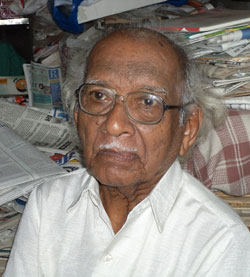
Mr Sadanand Shetty......

Mr Sadanand Shetty......
Sadanand Shetty...Founder OIOP

Monday, November 28, 2011


OIOP December 2011 issue

Cutting the red tape

If one has to nominate one institution which has held the country together in the first 60 years after Independence, and contributed most to its progress till now, it would be the ‘higher civil services’. Unfortunately, now, corruption and malpractices have allegedly seeped into the system in a big way, eroding some of its credibility. Even in this whirlpool, we can count many who have stood steadfast to their ideals and have served the country with honesty and integrity.
One of the common villains identified by civil society organisations for the all pervasive corruption in governance is the bureaucracy. Corruption in our country is perceived to be a vicious cycle starting from political corruption, which flourishes thanks especially to corruption in the bureaucracy which is hand in gloves with the corrupt political leaders. Therefore the need of the hour is to revamp the bureaucratic apparatus to give this country good governance. The first step to bureaucratic reforms should begin with the right kind of training of young recruits opting for civil services and the curriculum should focus more on honesty, integrity and efficiency. Though the credibility of bureaucracy has taken a severe beating with large scale corruption seeping into the system, all is not lost. There are many, who still hold on to their ideals and serve the country with honesty and integrity.
One India One People has ‘Bureaucracy’ as its theme for December 2011 under the cover title ‘Cutting the red tape’. We are fortunate to get seasoned bureaucrats to share their views, opinions and offer suggestions to get bureaucracy back on the track. 

In the lead article ‘Getting bureaucracy back on the track,’ Mr. E. A. S. Sarma, former Secretary to Government of India and Principal of Administrative Staff College of India in Hyderabad laments that the Indian civil services are caught in the vicious cycle of increasing corruption in the country’s electoral system and the consequent pressure from the politicians to facilitate the generation of black money. If this situation is allowed to continue any longer, it will cut the roots of our democratic system and allow the resources of our country to be frittered away, he warns.


Former Central Vigilance Commissioner, Mr. N. Vittal in ‘2T for good governance,’ explains how the ‘2T principle’ suggested by him can ensure a clean system over a period of time.  He emphasizes on transparency in selecting the right people for the right posts.


In ‘Redesigning the bureaucratic apparatus,’ Dr. Jayaprakash Narayan, Founder of Lok Satta Party, writes that empowering local governments, putting an effective system of accountability in place, redesigning the bureaucratic apparatus and redefining the role of the State are four important measures that need to be swiftly adopted in a sustainable manner to make the bureaucracy an effective instrument in a democratic society.


In ‘Bureaucracy needs a makeover’, Mr. N. Ramarao, IAS (retd), advocates the urgent need to revamp bureaucracy and the first step, he says would be to change the recruitment procedure. Let us develop in our young recruits a sense of self-esteem and self-confidence, so that they can serve the country with their heads held high, he says.


Mr. T. S. R. Subramanian, former Cabinet Secretary to the Government of India and former Chief Secretary to the government of Uttar Pradesh, writes that despite political interference and stories of corruption seeping into the system, members of higher civil services perform brilliantly; many stand out to take on major responsibilities on their shoulders, and help keep the system going. The country owes a debt of gratitude to the unsung heroes, he says.


In ‘Plots and Plans to end corruption,’ Mr. S Shankar Menon, IAS (retd.) and former Additional Chief Secretary to the Government of Maharashtra (1995-99),  draws out a blueprint to weed out corruption in the country by proposing a new scheme called the Sardar Patel Yojana.

Mr. Prakash Bal Joshi, senior journalist and artist, in ‘The Powers that Be,’ writes that ‘Committed Bureaucracy’ has no place for neutrality in civil services, as more often than not, bureaucrats are expected to toe the official line of the political executive in power. 


In ‘Face to Face’ Pamela Philipose has a tete-a-tete with Aruna Roy, founder member of the National Campaign for the People’s Right to Information (NCPRI) and the Mazdoor Kisan Shakti Sangathan (MKSS). She traded a promising career in the bureaucracy for an activist’s existence in 1975, and is presently intensely involved in the crusade against corruption.


Know India Better features Agra, the city on the banks of the River Yamuna in Uttar Pradesh, which achieved fame as the capital of the Mughal emperors, is one of the most favourite tourist destinations in India, because of the many magnificent historical buildings, most notably the legendary Taj Mahal, an architectural marvel. The Agra Fort and Fatehpur Sikri too are impressive and etched in history for the power struggle of the Mughal kings as well as their love for art. All three structures are UNESCO World Heritage sites, putting the city on the global radar. Text and Photographs by Dr. M. A. Haque


Great Indians profiles:

Nain Singh Rawat (1830 - 1895) - At a time when there were no vehicles or maps to take you to far off places, Nain Singh Rawat, mapped the trade route to Tibet through Nepal, found the altitude of Lhasa and also mapped a major section of the  River Tsangpo.


Chaudhary Charan Singh (1902-1987) - Charan Singh was one of those rare politicians and a leader of the farmers, who regarded nation’s interests above everything else. He was also a social reformer who brought much notable development in the country.


Vice Admiral N Krishnan PVSM DSC (1919-1982) - It was his wise plan that saved INS Vikrant. A colourful and engaging personality, Vice Admiral N Krishnan’s formidable legacy continues to this day.


Also read our guest column by Nagesh Kini, a Chartered Accountant and activist, and regular columns on culture, vedic mathematics and rural concerns! To order a copy, call 022 – 2353 44 00 or mail to oiopsub@fouressindia.com


Monday, November 7, 2011


November 2011 issue – Stress & You


Whether one lives in an urban area or a rural setting, life has become quite different from what it used to be a few decades ago. Today in the fast paced world and changing life styles, people are going through various kinds of health problems with stress and tension topping the list. Stress refers to the consequence of the failure of a person to respond adequately to mental, emotional, or physical demands, whether actual or imagined. With increasing stress in all areas of life, there has been an increase in the number of cases with depression and anxiety. Stress has now become an inevitable part of daily life and conversation. OIOP’s November 2011 issue has Stress as its theme, where experts give their opinion on how to cope with stress, but more importantly on how to live a stress free life.

In the lead article, ‘Adopt a healthy lifestyle’, eminent psychiatrist and founder of Mindtemple, Dr. Anjali Chhabria recommends simple solutions to decrease stress in your life and achieve mental fitness at a time when work-life imbalance, family and marital conflicts, low tolerance level and hectic lifestyle are increasing stress levels of people today.


In ‘A healthy mind for a healthy body’, Assistant Honorary Consultant, Psychiatry, B. J. Wadia Hospital for Children in Mumbai, Dr. Vani Kulhalli says that as mental stress affects every part of the body, we must take care of our mind to have a healthy body.

Eminent psychiatrist Dr. Harish Shetty in ‘Student life: Beating the blues’, emphasises that if corrective measures are not taken in dealing with stress in students, things can aggravate and lead to more serious problems. Therefore, he suggests that parents should seek a counsellor’s advice before things get out of control. Professor and Head, Dept. of Psychiatry, Sion Hospital, Dr. Nilesh Shah and Consultant psychiatrist and psychotherapist, Dr. Avinash De Sousa in their article offer excellent tips on managing stress.

Consultant and Head, Human Strategies Organisation, Mr. Jolly J Mathews talks about the significant role of HR in devising policies in reducing and managing stress at work place and to create an organization with happy, productive and passionate employees.

Prominent spiritual leader Shri Sadhguru Jaggi Vasudev says stress is unpleasantness and is self created. It can be dropped and a stress free life can be created by ‘Inner Engineering”. His article guides the reader to inner engineering technique.

Practising Ayurveda doctor, certified yoga teacher and yoga therapist, Dr. Aashish Phadke highlights the role of ayurveda and yoga in effectively dealing with stress. 


Secretary and Research Coordinator, The International Board of Yoga, Mumbai, Dr. Shantharam Shetty writes that meditation can reduce stress but it requires hard work to reach the state of higher consciousness through meditation.


In Know India Better, travel writer Akul Tripathi rides, walks and climbs from Dehradun to Ghangria in the Garhwal region of Uttarakhand to play with the fairies in the Valley of Flowers and cleanse his soul with a dip in the icy waters of Hemkund Sahib.

Former Central Vigilance Commissioner N. Vittal in the column Patriotism Redefined asks if the idea of patriotism is becoming irrelevant in a borderless world.


In Face to Face senior journalist Pamela Philipose speaks to Radha Kumar,  one of the three interlocutors appointed by the Government of India to initiate a sustained dialogue with people in Jammu and Kashmir and search for a way to peace in the troubled state. Kumar narrates her experience as a woman interlocutor and her hope for a resolution of conflict in the state.

Three Great Indians who have been profiled include:


Rt. Hon. V. S. Srinivasa Shastri –  a powerful orator, an ardent nationalist, he was a multi-faceted personality. His contribution to the country as a statesman is invaluable.


Saraswathi Gora – Brave, an incorrigible optimist, social reformer and progressive thinker, she was a great champion of women’s rights and individual dignity.
 

Lt. Triveni Singh AC – The young officer knew no fear. His raw courage averted what could have been a blood bath of innocent citizens.

Also read the regular columns on culture, vedic mathematics, nature and contemporary issues.

Hurry! Get a copy. Call 022-2353 44 00 or email – oiop@vsnl.net

Thursday, October 6, 2011

Behind the News


Though the term ‘Media’ connotes different fields, it is more often associated with print and audio-visual media. There was a time when newspapers were the sole source of information for events happening all over the world. With technological advancement today, there are several ways through which we can keep ourselves updated about ‘second to second’ happenings across the universe. As new and latest devices are entering the market, the competition is hotting up. To beat competition, the print as well as audio-visual media are resorting to every gimmick they can think of to gain readership/viewership. The media blitzkrieg has however left the audience confused about the authenticity of news that is being dished out to them. The October 2011 issue of One India One People highlights the changing face of media amidst cut-throat competition. The articles carry insider’s views as these have been contributed by senior journalists.


Trial by the media is on the rise in India, which is a dangerous trend, as it would mean challenging the judicial system and also taking over the role of the executive or the legislative wing of the democracy. In the lead article Abhay Mokashi focuses on this trend as he urges those in the media profession to adhere to professional ethics and not to forget their role in the society. 


In ‘Merchandisation of the Media’, P. K. Ravindranath,  rues the downslide of the quality and content of Indian media as Page 3 culture, unprofessionalism, commercialisation and blind race to gain TRPs have crept in like never before. Will there be an end to it or is the downslide here to stay, he wonders.


Any debate is supposed to present different, even opposing arguments on a topic, so that audiences are able to evaluate varied viewpoints and develop informed opinions on the subject. However, superficial, unbalanced and ill-informed discussions on our 24x7 news channels often serve to maintain the status quo rather than challenge the dominant order, writes Ammu Joseph in ‘Lopsided debates 24x7’.


Ranjona Banerji, in ‘Murdoch, Radia and some uncomfortable questions’ writes that the three recent incidents --- The Rupert Murdoch episode, Nira Radia tapes and senior journalists lobbying for corporates, highlight a crisis in the media which need to be addressed, and also raise questions on the authenticity of media as an institution.


Mukesh Sharma, Deputy Director General of Prasar Bharati, in ‘Time to awaken the dormant giant’ opines that in order to gain TRPs the quality of content and accuracy of news on the numerous satellite channels is being compromised. Only a new vision statement for Doordarshan can awaken the dormant giant to once again showcase, protect and preserve the culture and diversity of one India and its one people.


In ‘Survival of the fittest’, Editorial Director of Rediff.com Saisuresh Sivaswamy says social networking tools such as tweets and blogs can provide one the newsbreak but nothing beyond that. The success of social media cannot undermine the importance of mainstream media. While they intersect each other very often, neither is capable of replacing each, he concludes.


Unlike the politician, the journalist does not seek power, he seeks the truth. What is needed today is to marshal support for serious journalism by civic minded organisations and NGOs. It needs not just sympathy, but philanthropical and social support as never before, writes senior journalist P. K. Ravindranath in ‘Newspapers survive technology thrust’.


In Know India Better, travel writer Katie Dubey takes us on a tour of the bite-sized paradise, Sikkim. The colourful photographs add to the charm. It was very unfortunate that nature had to vent its fury on this calm and serene state. OIOP expresses its deepest condolences to the victims of the devastating earthquake in Sikkim and hopes that the state will spring back to its glory again.


In ‘Face to Face’ freelance journalist Bhakti Desai interviews veteran journalist and former chief reporter of Maharashtra Times Dinoo Randive who played a major role in the Samyukta Maharashtra Movement. He was felicitated by the Maharashtra Government in August 2011 by conferring on him the Lokmanya Tilak Jeevan Gaurav (Lifetime Achievement) Award.

The three Great Indians we have profiled in this issue are:

Tribhuvandas Kishibhai Patel, a great community leader and freedom fighter (1903-1994) – Rightly recognised as the father of the cooperative movement as well the Operation Flood in India, Patel was a man of action who dedicated his entire life to the nation, as a freedom fighter and a community leader.


Lt Colonel Dhan Singh Thapa PVC (1928-2005) – His cool courage, conspicuous fighting qualities and leadership were in the highest traditions of the Army.


Ashok Ranade, the scholar-musician (1937-2011) – His vast research in Indian music is regarded as an invaluable treasure. Dr. Ranade was hailed for the catholicity of his approach and broadness of his vision.


Also read P. M. Kamath sending three signals to Anna Hazare, Katie Dubey paying tribute to renowned writer Mulk Raj Anand and the story behind Gandhiji’s attire by Bobby Srinivas. More thought-provoking articles in our regular columns on culture, Vedic Mathematics, rural concerns and economy.
Grab a copy today! Write to oiopfoundation@gmail.com.

Sunday, September 4, 2011

Winds of Change


‘Team Anna’ has become the new face of the civil society in India today. With the 12-day fast of Anna Hazare forcing the Parliament to look at the Jan Lok Pal Bill with a new perspective, it was a triumphant moment not just for the team but for the entire nation. The highlight of the event was the mass movements organised by common citizens not just all over the country but also in certain parts of the globe. Though the motive of Anna and his team cannot be questioned, some did raise eyebrows on the means that they resorted to. Amidst such a scenario, One India One People looks at the past, present and future of civil society movements in India, in its September 2011 issue ‘Winds of Change’.


‘Civil Society in India: alive and kicking’ focuses on the vibrant civil society movements in India. It is just that the term got more popular, thanks to Team Anna. While some may be alarmed by these developments, some may herald them as nourishing agents of our fragile democracy. Whatever be the case, these movements are surely turning a new leaf, says Prof. Vrijendra, a professor and an active voice on social and human rights issues.


My-way or No-way, not the right way – this approach cannot yield enduring results in a complex society and may cause damage to democratic foundations in the long run. Civil Society must strive for depth, expertise and consensus among all its stakeholders, advocates Dr. Jayaprakash Narayan, the founder and President of Lok Satta Party.


Is the civil society crossing limits? N. Vittal, former Central Vigilance Commissioner, opines that though the motive of Team Anna in the fight against corruption cannot be questioned, what has become debatable are the methods adopted by them. He believes that in focusing their energies on impractical objectives, the civil society has definitely crossed its limits and failed.


Empowering people is the solution, says Justice Hosbet Suresh (retd.) and avers that civil society groups should understand that law by itself, strong or weak, will not solve the problem. The real solution lies in strengthening the human rights movement, express solidarity with them, with a view to empower people to live with human dignity.


Prof. Ram Puniyani, former professor at IIT Mumbai and also an active participant in social issues, particularly those related to preservation of democratic and secular ethos in our life, observes that the ruling government and civil society groups should not be looked at as hostile opponents but as complementary groups meant to take the society further. 


Kamayani Bali Mahabal, an expert in gender, health and human rights issues writes on the global movements that brought social change. Suppression and injustice cannot last for long. When people rise against autocracy to demand justice, no authority, however powerful, can ignore or defeat it.


Who is the true representative of the people? – asks Tanveer Jafri, columnist with popular daily newspapers/portals in India and abroad and a recipient of many awards in the field of communal harmony and other social activities. People elected their representatives so that they would speak for the common man and address his grievances. But today, people have lost faith in them as they have become corrupt and self-centred. No wonder then, a new order is rising who is fighting the system. But can they be entrusted to be the true representatives of the people, wonders Jafri.


A civil society of Gandhi’s imagination - Dr. Ravindra Kumar, Indologist and former Vice Chancellor of CCS University, Meerut, writes about a civil society as perceived by Mahatma Gandhi.


As usual, the ‘Know India Better’ section features an enthralling piece with lots of information and astonishing pictures. This issue, we are featuring ‘ALMORA - an enchanting town on the ridge. The beauty of Almora and its surrounding areas, in the Kumaon region of Uttarakhand is unmatched. Almora is historically significant and a pilgrim’s delight with many ancient and beautiful temples. Today, development may be fast encompassing the region, but the serenity and beauty of this charming hill town remains untouched. (Text and photos : Dr. M.A. Haque)


In the ‘Face to Face’ section, Dr. Shantha Sinha, the Chairperson of the newly constituted National Commission for Protection of Child Rights (NCPCR) and renowned anti-child labour activist, speaks on eradicating child labour and granting children a dignified life.

This issue we feature the following great Indians:

Phulrenu Guha – Crusader for women’s freedom (1911-2006) – She was a freedom fighter, social worker, philanthropist, founder of institutions and a pioneering leader of women’s movement. Her contribution to the upliftment of women and societal development is incomparable.


CQMH Abdul Hamid PVC – Inspiring bravery (1933-1965) – Displaying complete disregard for his own safety, CQMH CQMH Abdul Hamid PVC, put up a brave fight against intruders. His actions inspired his comrades to put up a gallant fight and beat back the enemy assault. His bravery in face of the enemy was a shining example to the whole division and in the best traditions of the India Army.


Chaudhary Ranbir Singh – A great son of Mother India (1914-2009) – Chaudhary Ranbir Singh (Hooda) was one of those brave sons of Mother India who fought for our freedom under the leadership of Mahatma Gandhi and post independence worked day and night for rebuilding the nation.