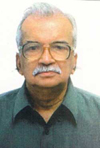
Mr Sadanand Shetty......

Mr Sadanand Shetty......
Sadanand Shetty...Founder OIOP

Tuesday, August 14, 2012


August 2012 issue ‘Do We Care?’

Disability is a condition that often evokes sympathy but not empathy. The disabled in our society are discriminated, more because of lack of awareness rather than insensitivity.  Despite a sizeable population of disabled in India, it is unfortunate that they are not on the radar screen of the Nation. It is shocking that till 1995 there was no law to secure their rights and for 54 years after Independence, till 2001, they were not counted in the census. While these two basic flaws have been corrected, the damage done was so huge that generations have paid and will pay the price for being disabled in India. Even the proposed Right of Persons with Disabilities Bill, 2011 is riddled with problems, and calls for the urgent attention of the Ministry of Social Justice to rectify the faults.

With proper education and employment opportunities, most disabled persons can do as well as any other human being in society and can play a contributing as well as fulfilling role in society. What is needed though is a change in societal attitudes towards the disabled and sensitivity towards their needs such as providing them accessible surroundings, inclusive education, employment opportunities and above all acceptance.

The August 2012 issue of One India One People looks at the various challenges faced by the disabled in India and also the various advocacy groups that are building awareness and fighting for the rights of the disabled. Awareness and a little caring attitude of citizens towards the disabled can go a long way in breaking barriers is what the issue attempts to highlight.

In the lead article on The Rights of Persons with Disabilities Bill, 2011, Rahul Cherian Jacob, founder of Inclusive Planet Centre for Disability Law and Policy, stresses the need to redraft the Bill from scratch to meet the needs of the disabled population of this country. He observes that The Persons with Disabilities (PWD) Act, 1995 is an outdated legislation and needs major amendments, while the proposed Rights of Persons with Disabilities Bill, 2011 is riddled with many problems.


In ‘Creating a barrier-free environment’, Shivani Gupta, founder of AccessAbility, India’s premier Access Consultancy firm based in New Delhi, an expert on  issues and policies relating to accessibility and recipient of several awards for her consistent inputs towards promotion of inclusive environments, writes that accessible infrastructure is one of the key requirements to enable inclusion. Infrastructure planning must include accessibility for disabled people by default and budgetary allocations must be made to retrofit accessibility into the existing infrastructure, she adds.


In ‘Channelising abilities’, Shanti Raghavan, founder and Managing Trustee of Enable India, a non profit organisation that works for the economic independence and dignity of persons with disability across India, says that persons with disabilities are neither less abled nor less efficient than others, but they fail to get employment because employers are unable to use their potential.


The article ‘Education through an inclusive lens’, looks at inclusive education. Ruma Banerjee, Director, Seva-in-Action Association, Bangalore, writes that while the RTE Act provides for inclusive education, the need of the hour is an inclusive learning environment, which provides accessible infrastructure, peer support, humane teachers and systemic reforms.


Shubhangi Vaidya is the mother of a teenager with autism and teaches in the School of Interdisciplinary and Transdisciplinary Studies, Indira Gandhi National Open University, New Delhi. In ‘Understanding autism’, Ms Vaidya says that autism is a difficult and challenging disorder to deal with, but advances in science, medicine and educational interventions can make the life of autistic persons more fulfilling, enabling them to actualise their potential.

In ‘Language that leaves you speechless’ and ‘Advocating a bold attitude’, Malay Desai, a writer with Trinayani, a not-for-profit advocacy trust founded by Ritika Sahni, tells us inspiring stories of Sunil Sahasrabudhe, a teacher and Nilesh Singit, a disability rights activist, who have overcome their disabilities to live a fulfilling life. (This is a part of a series of articles that celebrate the intriguing lives of persons with disabilities. Trinayani works towards Disability Awareness and Support, communicating through workshops/seminars, print, radio, films and other electronic media.)


In ‘The war against polio’, T Jacob John, retired professor of Clinical Virology at Christian Medical College, Vellore and who has served on the Global and National Committees on Polio Eradication, highlights some flaws and positive aspects of the National Polio Eradication Programme and concludes that there are enough reasons for India to be proud about eradicating polio.


Know India Better
In ‘A Taste of the Kumaon’, Akul Tripathi, media professional and travel writer, is enamoured by the impeccable natural beauty in the rolling hills of Kumaon in Uttarakhand and after a brush with adventure sports and a walk around a haunted lake, sets off in search of a life changing experience - to sight a tiger in the wild at the legendary Jim Corbett National Park. 
In ‘The Eden of Deccan’, Akul Tripathi treads softly around the proud blossoms of an unknown Eden, the Kaas Plateau near Satara, tucked away in the hills of the Deccan.


General section:
In ‘Advice abroad is applicable at home’, Prof. B. Ramesh Babu, a specialist in International Relations and formerly the Sir Pherozehah Mehta Professor of Civics and Politics at Mumbai University, takes a critical look at Prime Minister Dr. Manmohan Singh’s address at the global meeting on sustainable development in Rio de Janeiro, Brazil in mid-June. The address was replete with sermons to the West. However, looking at the chaos within the UPA government, Prof. Babu feels it is high time that the PM practices what he preaches.

In ‘21st Century as the Asian Century: Challenges to Indian role’, P. M. Kamath, Hon. Director, VPM’s Centre for International Studies, Mumbai and former professor of politics, University of Mumbai, notes that the biggest challenge to India emerging as a major power in Asia is lack of will power in the present Indian leadership to exercise that role.

Face to Face: “Discrimination arises more from the lack of awareness than insensitivity,” says Javed Abidi, pioneer of the cross-disability movement in India in an e-mail interview with Rajlakshmi Pillai. Abidi founded the Disabled Rights Group in 1993 to work specifically on cross-disability issues. He was instrumental in setting up the National Centre for Promotion of Employment for Disabled People (NCPEDP) in 1996 and has been its Director since 1997. Abidi talks about the challenges faced by people with disabilities in India and the need for creating awareness in society. 

This issue profiled three Great Indians:
Dr. Yellapragada Subbarow-The complete scientist (1895-1948) - The New York Herald Tribune described Dr. Yellapragada SubbaRow as “An eminent medical mind of the century.” He discovered cures for many killer diseases which brought great relief to millions of ailing people throughout the world.

Dr. Neera Desai-A pioneer of women’s studies (1925-2009) - Dr. Neera Desai was responsible for attracting hundreds of young college girls into emerging discipline called ‘Women’s Studies’. She nurtured two generations of women researchers, activists, academicians in such a way that women’s cause became a lifelong mission to them.

Major Mohan Gangadharan Shaurya Chakra-The officer with a ‘Buddha smile’ (1961-1999) - A promising officer and a gentleman to the core, Major Mohan Gangadharan, lost his life while fighting Karbi militants in Assam. He displayed conspicuous courage, exemplary leadership, devotion to duty and gallantry beyond the call of duty and was a source of inspiration to his men.

And also read our regular columns and other features. To book a copy, email to oiopfoundation@gmai.com / oiop@vsnl.net or call Nagesh Bangera, OIOP Subscription-in-charge at 022- 2353 44 00.
We look forward to your feedback.


Monday, July 9, 2012


July Issue - Consumer Concerns


The CPA or the Consumer Protection Act came into force in India in 1986. In the past 25 years, the Consumer Redressal Forums have played a significant role in protecting the rights of consumers and giving redressal to complainants. But with rising consumerism, the market is flooded with products of all kinds, making it increasingly difficult to keep control on the quality. The competition among manufactures and vendors to lure customers into buying their products has also increased manifold and some of them resort to unfair trade practices. However, thanks to the consumer forums and consumer activists, there is a greater awareness among consumers, while buying a product. The CPA has also helped in curbing some of the malpractices. But it`s still a long way before the consumer can be called a ‘king’.

The July 2012 issue of One India One People focuses on the concerns and rights of consumers. If only all consumers, wake up and be enlightened about their rights and duties, that there will be less incidents of getting cheated is what consumer activists advocate.

In the lead article ‘Improve the Consumer Act’, Jehangir B. Gai, consumer activist and winner of Government of India’s National Youth Award for Consumer Protection, calls for a suitable amendment to the Consumer Protection Act of 1986 to achieve its objectives. For speedy redressal of complaints, he advocates that the Act be restricted to individual consumers and relegate business houses to the regular civil courts.

In ‘If we don’t go green, we will soon see red’, Dr. Roopa Vajpeyi, Editor, Consumer VOICE, warns that unless India protects its ecological spaces through a combination of eco-friendly policies and programmes and with people’s participation, the country may soon find itself sitting on an ecological time bomb.

Consumer Dispute Redressal Forums have evolved since they were set up 25 years ago. However, active participation by all its stakeholders could make the forums far more effective, says Dr. Prem Lata, member, Consumer District Redressal Forum, North West Delhi, in her article ‘25-year journey for redressal’.

In ‘Help is a call away’, Sunil Prabhakar, a well-known expert on consumer issues on BFSI (Banking, Financial Services, and Insurance), Advisor-Consumer Voice, National Consumer Helpline and panelist as Sr. Economist on All India Radio writes on The National Consumer Helpline 1800-11-4000, started seven years back, which has become very popular with consumers as they get quick information and guidance on their queries.

 
Milk adulteration in the country is rampant. While those guilty of such malpractices should be brought to book, it is also the duty of consumers to remain alert and report such cases, writes Ashok Kanchan, Technical Advisor with VOICE, a Consumer NGO & Advisor with National Consumer Helpline (NCH), a Public Service Project of Ministry of Consumer Affairs in the article ‘The white poison’.
 
Misleading advertisements infringe on the rights of consumers and influence their product choices. Dr. Sheetal Kapoor, Associate Professor, Department of Commerce and Convenor, Consumer Club, Kamala Nehru College, New Delhi in the article ‘The consumer trap’ stresses the need for the government and other regulatory bodies to come up with stringent laws and better enforcement to curb unfair trade practices.

Consumers are facing severe health risks due to indiscriminate use of pesticides in fruits and vegetables. India needs a robust policy to ensure that consumers are protected from unsafe and unhealthy food, writes Bejon Misra, a Consumer Expert and Member of the Food Safety and Standards Authority of India (FSSAI) in the article, ‘What’s on your plate?’

In ‘Know India Better’ we feature one of the holiest cities in India, Allahabad, situated at the holy Triveni Sangam, where the famous Kumbh Mela is held once in 12 years. It is a city of historical significance and was at the forefront of the freedom movement. Allahabad’s importance may have waned, but its eminence will never diminish as long as the Kumbh Mela continues to be observed and the historical monuments stand proudly on its land. The text and photographs are by Dr. M.A. Haque, retired Director-Scientific, Ministry of Environment and Forests.

In ‘Face to Face’, Anshika Swaroop interviews veteran activist, Mr. Narendra G. Wagle, who has been at the heart of the consumer movement in India. A consumer activist, who retired 10 years back from the post of Chairman and President of the Consumer Guidance Society of India (CGSI), Mr. Wagle has worked in a wide spectrum of professions. Having served on various national and international government and quasi-government councils and committees including Bureau of Indian Standards, Central Pollution Board, Ministry of Health etc, he has garnered extensive experience and expertise. He believes in upholding the rights of the consumer and has helped several people to fight for them.

In ‘Focus’, B. Ramesh Babu analyses the meeting of Myanmar leader Aung San Suu Kyi and Prime Minister Dr. Manmohan Singh in the article ‘Looking East’.

Our ‘Great Indians’ for the month are:
Sardul Singh Caveeshar: The word warrior (1886-1963) - Sardul Singh Caveeshar was one of the leading freedom fighters from Punjab. He was a prolific writer, thinker, political leader, journalist, editor and a nationalist. For his great services rendered to the nation, and his radical-progressive views, he will be remembered for long. (Text by Dr. Ravindra Kumar, former Vice-Chancellor, CCS University, Meerut)

Admiral S M Nanda  PVSM, AVSM: India’s Nelson (1915-2009) - He was called India’s Nelson for his bold decisions. Admiral S M Nanda’s meticulous plan helped attack Karachi harbour successfully in the 1971 war with Pakistan. Under his command, the Indian Navy achieved due recognition. (By Brig Suresh Chandra Sharma (retd.))
 
Prof. Leela Dube: The feminist crusader (1923-2012) - Prof. Leela Dube was a renowned feminist anthropologist and a crusader for women’s rights, who enriched a discipline of anthropology by bringing new insights into women’s studies. (By Dr. Vibhuti Patel, Professor and Head, Dept. of Economics, SNDT Women’s University, Mumbai)

And also read our regular columns and other features.

And also read our regular columns and other features. To book a copy, email to oiopfoundation@gmai.com / oiop@vsnl.net or call Nagesh Bangera, OIOP Subscription-in-charge at 022- 2353 44 00.
We look forward to your feedback.

Sunday, June 3, 2012


June 2012 issue – Power play


India is making rapid progress in economic development, thus necessitating growing consumption of energy. The country ranks as the world’s seventh largest energy producing country and fifth largest energy consuming country. However, there is a big cost attached to this consumption – an irreversible damage to our environment and ecology apart from exhausting our natural resources. The escalating difference between supply and demand necessitates the development of cost effective energy resources. It is also said that going by the present level of consumption, oil will last only for the next 50 years, natural gas for 200 years and coal reserves for 230 years. These alarming figures call for urgent energy conservation and energy efficient measures. OIOP June 2012 issue looks at ways and means to achieve maximum energy efficiency. 

The lead article talks about tackling energy crisis. Energy crisis can be mitigated by taking effective measures to conserve energy, increase efficiency, generating cheap and environment friendly power, reducing transmission and distribution losses and promoting renewable energy sources, says S. Ratnakumaran, Managing Director, Kerala State Cooperative Rubber Marketing Federation and Energy Consultant. He is also the recipient of Kerala State Government Award 1997 for initiating Energy Conservation Clubs in promoting energy conservation among students and public for the first time in the country.

In ‘The energy efficiency drive,’ Narasimhan Santhanam, Cofounder and Director, EAI (Energy Alternatives India), one of the leading Indian research firm focused on renewable energy and clean technology explores the types of energy efficiency opportunities that exist in various sectors and also tools that could spur energy efficiencies in these segments.


‘Green habitats,’ is on Zero Energy Buildings (ZEBs) which offer excellent solution to energy conservation and efficiency as they are least dependent on natural resources throughout their life cycle. By adopting a few simple techniques, a building can save up to 40 percent energy. Pradeep Kumar, Anurag Bajpai, Vernica Prakash and Vishrut Kumar Singh, from Green Tree Buildings Energy (P) Ltd., highlight the many benefits of green buildings. 

Optimising resources is on how energy resources can be best managed by optimising energy efficiency. Thilotham Kolanu, who has extensive experience in Environmental Management and Renewable Energy Consultancy and is Director, Greenstratos Consulting Private Limited., urges all consumers – commercial, industrial, domestic and government to make ‘energy conservation and efficiency’, a part of their work culture.

Unless all stakeholders - producers, suppliers or consumers, realise the fall out of their indifference towards energy conservation, the future is bleak, writes Ravindra M Datar, Director, Senergy Consultants Pvt Ltd in the article ‘It’s the responsibility of every stakeholder’. He has been carrying out energy audit and conservation studies for industries as well as commercial premises.

In ‘emPOWERing a rising nation’, Akul Tripathi, a media professional and freelance writer, writes that a planned, sustained and development-oriented outlook towards using renewable sources of energy can go a long way in filling the humongous gap between electricity production and consumption, while improving technology can better harness and increase their potential. 

Energy ventures - The drive to increase energy efficiency has thrown up a number of business opportunities along the value chain. Paraman Radhakrishnan, Director at Devki Energy Consultancy Pvt. Ltd., Vadodara, Gujarat, hopes these new ventures are genuine and not just “bubbles”.

In Face to Face, we feature M.G. Devasahayam, an all-round activist who has voiced his concern over several important issues, be it India’s democratic process, corruption in politics or pursuing issues on environment and other public causes. He worked with the Indian Army for five years. Later, he was appointed to the IAS in 1968. He had the privilege of raising a new district Bhiwani in Haryana and evolving an integrated development model, which became the precursor to the IRDP (Integrated Rural Development Programme) in the seventies.
Devasahayam was closely associated with Lok Nayak Jayaprakash Narayan (JP) during and after Emergency. Devasahayam is also a prolific writer and author of India’s Second Freedom - An Untold Saga and JP in Jail-An Uncensored Account. In an interview with Rajlakshmi Pillai, M. G. Devasahayam shares his views on tackling energy crisis and restoring the dignity of democracy.


The Know India Better feature is on Bhubaneswar, the capital of Orissa, which explores the best of Oriya heritage. As you wander past the temples or walk in the shadows of the giant stupa through the intricately decorated gateways of the monasteries you are transported back in time and into the pages of history but with all the modern amenities. Exploring Bhubaneswar is an experience which no history book could ever provide, writes Rangan Datta, a travel writer.

In Patriotism Redefined, Ranjona Banerji, senior journalist and consulting editor with the media website MxMIndia.com, says, “The biggest test is how we can all tolerate each other without resorting to violence in the name of ‘love’ for one’s country.”


The 25% reservation clause in the RTE (Right to Education) Act has drawn a mixed response. Many have hailed it as a positive step towards bridging the gap between the haves and the have nots, but its right implementation is also important. In ‘Reservation in RTE – the way forward’ Shantanu Gupta, who works with a policy think tank- Center for Civil Society, New Delhi, offers various solutions and models, which can be adopted by state governments to implement the above said constitutional provisions to perfection.

In ‘The good, bad and ugly’, Dr. P. M. Kamath recounts his meeting with the late Mr. P. R. Nayak, who was the Municipal Commissioner of Bombay in the late 50s. He also shares some of the excerpts from Nayak’s biography published by his son. Dr. Kamath is former Professor of Politics, University of Mumbai; currently Hon. Director, VPM’s Centre for International Studies (Regd.) and Adjunct Professor, Department of Geopolitics and International Relations, Manipal University, Manipal. While in Mumbai University, he guided a doctoral thesis on International Terrorism and also authored numerous research papers on terrorism.

In Great Indians we profile:
Giani Gurmukh Singh Musafir, a seasoned politician and scholar (1899-1976)
Giani Gurmukh Singh Musafir was a prominent figure who emerged on the socio-political scene of Punjab during India’s freedom movement. Besides being a leading freedom fighter, Musafir was a seasoned politician, an eminent Punjabi writer, scholar, poet and an orator.

B. P. Pal, the Homi Bhabha of Indian agriculture (1906-1989) - Benjamin Peary Pal was not only a gifted plant breeder and geneticist but was endowed with amazing human qualities. A multi faceted personality, he had varied interests from painting to music. A rose breeder of distinction, Pal created several new varieties. His varied interests certainly made him the Homi Bhabha of Indian agriculture.

Major Sudhir Kumar Walia AC, SM, BAR, an officer of calibre and courage (1971-1999)
He was well read, full of life and had a good sense of humour. A complete army man, he led his team to counter 20 militants and though wounded refused to shift till the fight was over. Though he succumbed to his injuries, Major Sudhir Kumar Walia lives on as an inspiration to others.


And also read our regular columns and other features. To book a copy, email to oiopfoundation@gmai.com / oiop@vsnl.net or call Nagesh Bangera, OIOP Subscription-in-charge at 022- 2353 44 00.
We look forward to your feedback.

Thursday, May 17, 2012


May 2012 issue 
Civic Citadel

The Brihanmumbai Municipal Corporation (BMC) also known as Municipal Corporation of Greater Mumbai (MCGM) is the civic body that governs the city of Mumbai and is India’s richest municipal organisation. Its annual budget is even more than that of some of the small states of India. Established under the Bombay Municipal Corporation Act, 1888, it is responsible for the civic infrastructure and administration of Mumbai and its extended suburbs. Many great personalities who played an important role in shaping the destiny of India during the freedom movement have held the august office of the mayor at some point of time. OIOP May issue, Civic Citadel, is a Collector’s Item on BMC and it traces the history and evolution of the Corporation.

The lead article ‘Such a long journey’ is on the evolution of the BMC. The epoch-making Bombay Act of 1888 led to the creation of three co-ordinating authorities—the Municipal Corporation, the Standing Committee and the Municipal Commissioner. Dilip Chaware, veteran journalist who has covered state and national politics for over 35 years, delves into history to tell us how the Brihanmumbai Municipal Corporation (BMC) evolved.

In ‘The Hall of Fame’, we have profiled a few stalwarts whose vision and contribution has made Mumbai the city of dreams.

Arthur Crawford was Bombay’s first Municipal Commissioner who did much for the city, using his dynamism and single-mindedness for the purpose. In her article ‘Arthur Crawford – Hero and Villain,’ Lina Mathias, Senior Assistant Editor, Economic and Political Weekly, gives an insight into the colourful record of this controversial figure.

In ‘A steady decline’P. K. Ravindranath, senior journalist, rues the deterioration in civic standards in the last three decades. Unless we find an army of selfless, devoted, public spirited young men to govern us, he feels there is no hope of redemption.

In his article ‘Bombay’s Birthday, Mumbai’s Future,’ S Shankar Menon, an IAS (retd.) officer and former Additional Chief Secretary to the Government of Maharashtra (1995-97), throws up a number of innovative ideas to have a corruption- free BMC in five years and elevate Mumbai to unprecedented stardom. Any takers?

In the article ‘Pipeline, lifeline,’ we look at the unique water supply system of Mumbai. Dense population and other issues have been a cause for water shortages in the city but with new schemes in the pipeline, this too might be a thing of the past, says Dilip Chaware.

The quality of health care provided by the municipal hospitals leaves much to be desired. In the article ‘A health check,’ Anuradha Dhareshwar, Associate Editor, One India One People, says that with a slew of new initiatives to bridge the gaps, the BMC hopes to upgrade its services.

Mangroves represent the spirit of Mumbai, says Bittu Sahgal, eminent environmentalist and Editor of Sanctuary Magazine in ‘Mangroves, Mumbai’s green armour’. They are without question plucky survivors that have managed to overcome toxic chemicals, heavy metals and human avarice. The unfortunate truth is that little do people understand just how important mangroves are to the quality of life of the citizens of Mumbai, he says.

Open spaces are the lungs of a city as it gives its residents a pollution-free place for rejuvenation and recreation. While these spaces in Mumbai are disappearing fast, it is heartening to note the work of civic activists and citizens to reclaim open spaces, writes Irene Lewis in ‘Let the city breathe’.

In the article, It’s in your hands - Dr. Akalpita Paranjpe, associated with various citizen forums like Mumbai 227, Freedom Team of India and Bharat Uday Mission, writes on how citizens’ forums can play a vital role in improving civic governance at the ward levels. 

While BEST’s bus service is one of the most affordable and reliable modes of commuting across the city, its round-the-clock electric supply at reasonable tariffs drives Mumbai’s swelling service sector. Dilip Chaware takes us through the history of Brihanmumbai Electric Supply & Transport Undertaking in BEST’s ride to fame.

The May issue has three features in its Know India Better section.

In Mumbai: From Dreamy Isles to the Isle of Dreams, Akul Tripathi explores some of the less frequented places in the city. Walking across Mumbai, Akul Tripathi, media professional and travel writer discovers there is so much that he never knew about the city he was born in. He rides through the many 'rabbit holes of wonder' and pieces together how the destiny of seven small pieces of soil became the destiny of a billion people. He comes out surprised, addicted and in awe - his current quest over, but a journey that has just begun.

Resplendent heritage is about the architectural grandeur of the Brihanmumbai headquarters. The BMC Headquarters near the historic Victoria Terminus is one of the first imposing heritage structures visitors to Mumbai encounter. Designed by Fredrick Williams Stevens, the architecture of this building is in the Victorian Neo-Gothic style, though the minaret forms and bulbous dome were adapted to relate to Indian forms, write Abha Narain Lambah and Kruti Garg, conservation architects.

In ‘An icon of the colonial past’, Akul Tripathi visits the Prince of Wales Museum of Western India (Chhatrapati Shivaji Maharaj Vastu Sanghrahalay) to discover how Mumbai’s cradle of time is faring.


In ‘Face to Face’ Dilip Chaware interviews Johny Joseph, senior IAS officer who retired as the Chief Secretary of the Government of Maharashtra on 30 November 2009. Mr. Joseph says, “Mumbai has unlimited potential, it only needs to be channelised.”


‘Great Indians’ profiles three icons whose contribution to Mumbai is incomparable
 
Sir Pherozeshah Mehta, The Lion of Bombay (1845-1915);

Nanasaheb V. Modak, Architect of modern Bombay (1889-1971)


and Sadashiv Kanoji Patil or S. K. Patil, The uncrowned king of Bombay (1898-1981).

To order this Collector’s Item on BMC, kindly contact….

And also read our regular columns and other features. To book a copy, email to oiop@vsnl.net or call Nagesh Bangera, OIOP Subscription-in-charge at 022- 2353 44 00.
We look forward to your feedback.